
UConn’s Greenhouse collection brings prestige to Storrs
By Laura J Augenbraun
April 15 2024
Cole Geissler walks into the greenhouses, smiling through a yawn and apologizing for being late due to traffic.
Meghan Moriarty, greenhouse manager at the University of Connecticut Botanical Conservatory, waves his apology off, asks how he’s doing and begins to share the tasks for the day. When she asks if Cole is able to care for their orchid collection, he excitedly jumps in.
“Oh! I wanted to show you this,” he says as he pulls up a photo on his phone of an orchid he’s been growing at home.
“It smells really good,” Cole says as he and Meghan huddle together, beaming over the photo of his flourishing orchid.
“Really? Like what?”
“Like a clean, sweet smell.”
They pull away and Meghan asks Cole about his mom. She laughs as she shows him a small green plastic frog his mother had left for her the last time she visited. The two then finish their overview of tasks and quickly part ways. Cole heads to the tropical collection, held in one of the three long greenhouses that make up the conservatory, and Meghan goes to the top of the Biology/Physics building, a UConn academic building that holds additional greenhouses used for private research.
As greenhouse manager, Meghan is not only responsible for the thousands of plant species found within the conservatory and research greenhouses, but she’s also tasked with caring for incredibly rare and extinct species, many of which can only be found in a handful of places, her greenhouse being one of them.
While the pressure of rehabilitating what may be the only seedling of a species left in the world is high, Meghan and her coworkers have been incredibly successful throughout their years. She explains their success by the simple fact of having previous experience and knowledge within the field, something she gained from years of greenhouse work throughout New England before landing what she calls her dream job here at UConn.
Meghan shared her detail-oriented approach on how to care for greenhouse species, something she repeats each morning, starting with watering and looking at every single plant in the conservatory, a task that takes about three to four hours.With her meticulous approach, she’s able to note minute changes within plants that are commonly overlooked. Like this morning, when Meghan happily exclaimed that the leaves of one of her plants were ever so slightly changing from yellow back to green, a tiny positive sign that the fertilizer she had put in the other day was working.
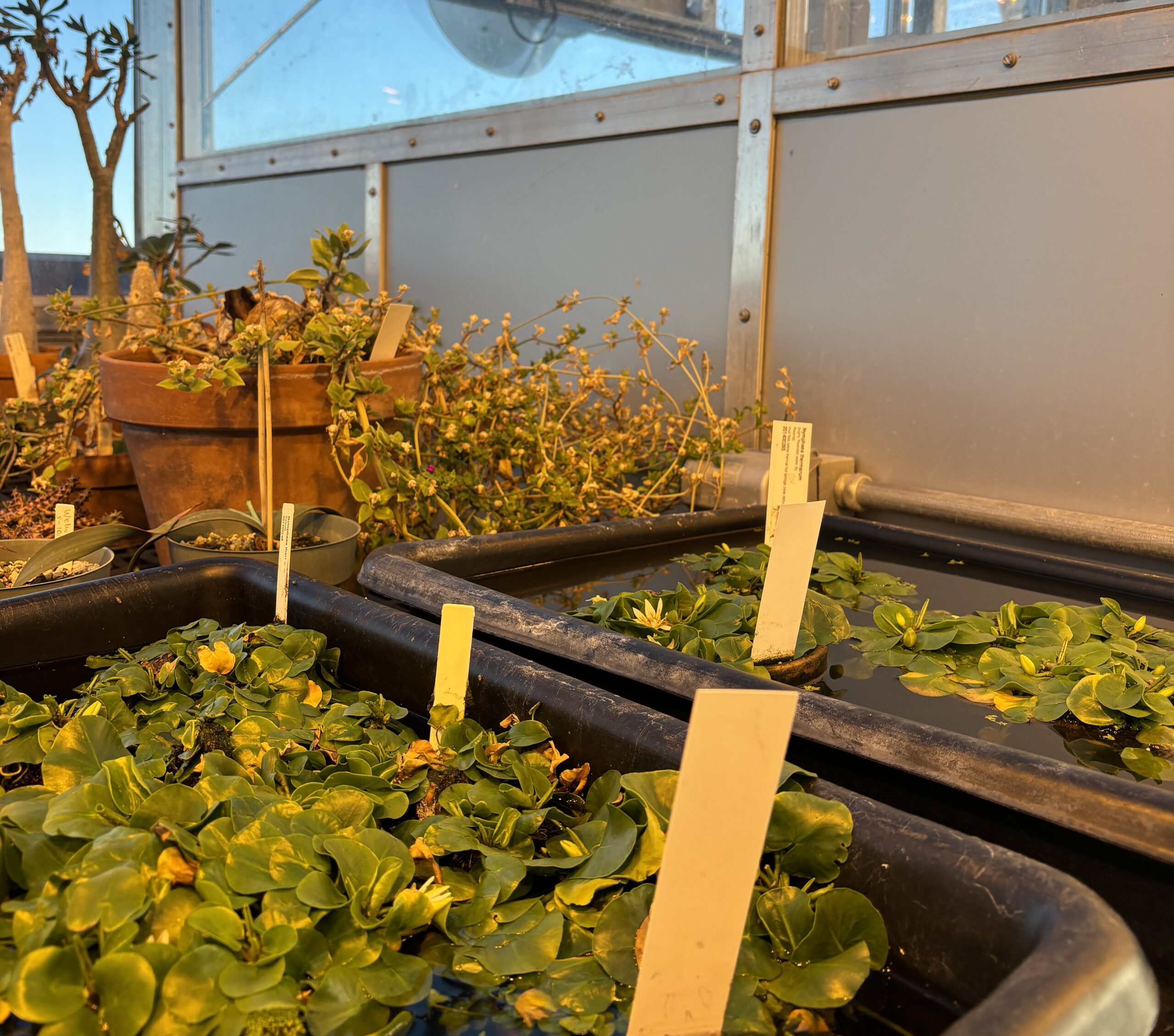
She then heads to the greenhouse across the hallway, checking in on the Nymphaea Thermarum, one of the many plant species she cares for that are currently extinct in the wild. This specific plant is a species of water lilies native to Rwanda that became extinct in 2009 from over-exploitation. While a few other conservatories have been trying to rehabilitate the species, Meghan’s greenhouse is the only known location where it has successfully flowered, a fact she humbly shares as though it’s nothing.
“If I’m doing my job right, nobody really knows that anything’s happening,” Meghan states, very matter-of-factly. She shared that she had simply noticed the water lily was on decline and decided it needed more sunlight, moving it to a sunnier location where it then blossomed.
Meghan explained how working in a greenhouse is very collaborative, with a focus on sharing seeds of rare and extinct plants, such as the water lily, with others who don’t have it. They do this almost as a way of ‘greenhouse insurance,’ as Meghan referred to it, so if something were to happen to the greenhouses here, the species would continue to grow in other locations. The overall goal for their work is straightforward -rehabilitate plants, share them with other conservatories, and eventually try to re-introduce them into the wild, all in an effort to combat the current sky-high poaching and extinction rates conservatories have seen lately.
While Meghan explains this, the frosty, 20-degree February air mixes with the tropical, slightly humid temperature as she jumps between one greenhouse and the next.
Meghan’s expertise and commitment to the greenhouses is clear as she makes a beeline to the Solanum Ensifolium, a species she’s been taking care of that is native to Puerto Rico. Despite the number of plants and how similar they may look in certain areas, she knows the exact location and backstory of each.
Meghan explains that this collection has been at UConn for years since UConn faculty began researching them. In 2017, Hurricane Maria devastated Puerto Rico, and when the faculty returned to the island to see them in their natural habitat, they found the population had been entirely wiped out from the storm.
“So for a very short period of time, we actually had the only one left anywhere, because it had been wiped out in its native land.”
Since then, they were able to continue to grow this plant, share its seeds with other conservatories, and re-introduce it to Puerto Rico, an impressive accomplishment, as their efforts saved this species from disappearing entirely. Meghan explains this incredible story while walking through the aisles of plants, swiftly dodging long stems and pushing aside hanging leaves, a pattern it seems she has memorized.
Without hesitation, she plunges her hand into a bucket of algae-covered water and quickly switches topics as she lifts a species of underwater plants called the Madagascar Lace Leaf. The leaf is paper-thin and completely see through – it’s obvious how it earned its name. She makes note of it and continues on, explaining plant species and how she got into the work she does.
“I just felt into the plants and, I don’t know…” Meghan trails off as she begins laughing, “I never left.”
She then turns to what she calls the ‘star collection’ of the greenhouses here at UConn, Conophytums, a species related to living stone plants. She credits this collection to her co-worker, Matt Opel, who has been curating it for years. It is one of the more comprehensive collections of this species in the entire world, and Meghan is working on getting it nationally recognized.
To my amazement and almost horror, she absent-mindedly touches one of the plants. “This is – woah, it’s empty! Try to squeeze that,” she exclaims, as though it’s her first time working with them.
She refutes a common misconception I had, that it’s bad to touch plants. To make this point clear, she bends an orchid towards me so I can smell the sweet scent it’s beginning to release, like the petals are coated in sugar.
Once we return downstairs to the three main greenhouses that make up the conservatory, two students cautiously peer around the corner, asking if it’s okay for them to walk around.
“Oh yeah, we’re totally open! Come on in, make yourself at home!” Meghan responds, smiling and waving them in.
As she begins watering the plants, the spray from the hose catches the sunlight beaming through the glass and creates a rainbow over the bushy hanging ferns that dot the ceiling.
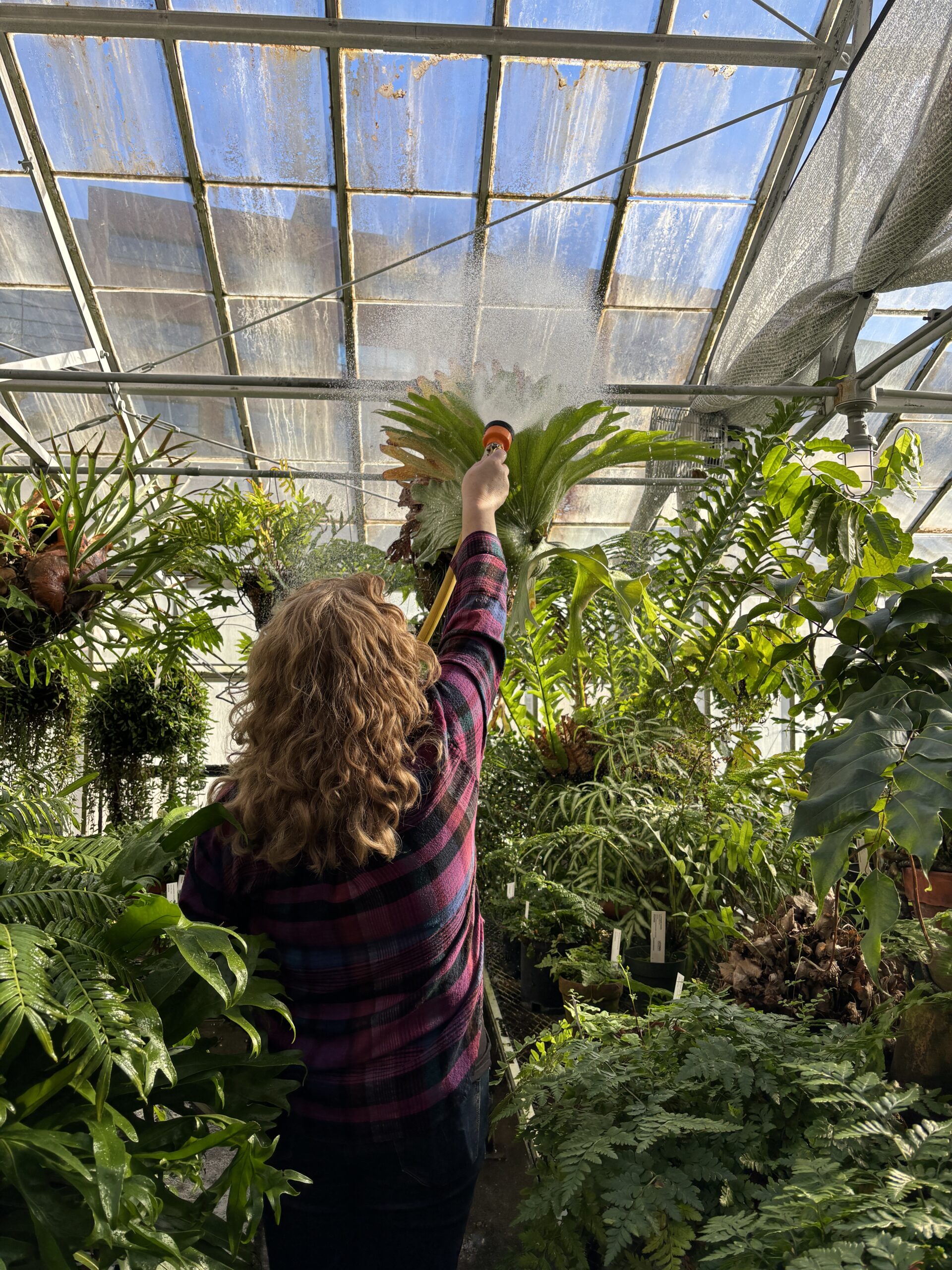
“It’s something about the daily care and the commitment… I don’t know, it just suits me for some reason,” Meghan reflects, “it really suits my personality. I never could picture myself working in an office, that wasn’t going to be an option for me.”
She moves from one greenhouse to the next, very casually sharing the names and small stories of every one of the hundreds of plants she’s passing by. She talks about one of her goals, to get Summer Rayne Oakes, an influencer in the plant world, to visit the conservatory, specifically to see the living rock plant collection and garner more attention towards the amazing number of plants that Meghan and her two co-workers, Matt and Cole, have worked hard to grow.
As Meghan leaves the tropical greenhouse, she notes the slight shift in temperature and humidity, purposely created to replicate the weather of the region the species are native to. She passes Cole walking through. The two smile and stop their work to share anything they’ve noticed so far. Everything seems normal, Cole shares, a small victory that doesn’t happen often.
The two continue on, Meghan quietly moving out of the way for students who’ve come to observe the plants, gracefully slipping by them as she continues her day in the Mediterranean room.